
Understanding Affiliate Programs & Networks
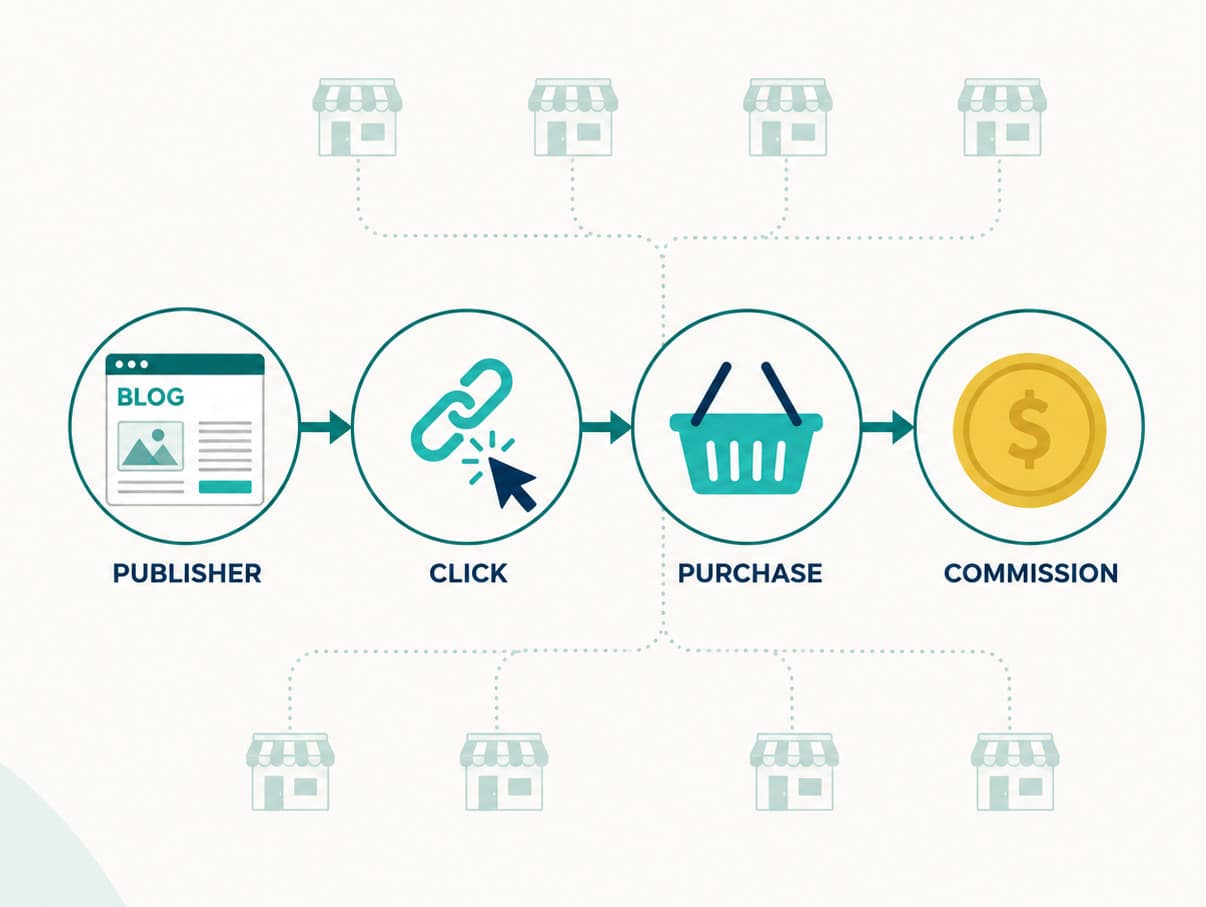
Affiliate economics become much easier to manage once you understand the path from impression to click to conversion to commission, because this shapes which products you will recommend and how you will structure your site.
The basic transaction
- Merchant creates an offer and affiliate programme.
- Publisher joins the programme and receives tracking links or another referral mechanism.
- Reader discovers the publisher’s content.
- Reader clicks the tracked link.
- Tracking attributes the referral according to the programme’s rules.
- Reader purchases or completes the qualifying action.
- Merchant or network records the conversion and later pays the publisher according to the programme terms.
Types of affiliate relationships
- In-house programmes: operated directly by the merchant (common among SaaS tools and course creators). These often pay higher commissions and provide more direct communication, but each one has its own login, terms and payout schedule.
- Affiliate networks: platforms such as Amazon Associates, ShareASale, CJ Affiliate, Impact and Awin aggregate thousands of merchants under one dashboard, one login and often one consolidated payment.
- Sub-affiliate / SaaS-specific networks: platforms such as PartnerStack or FirstPromoter are common among software companies and frequently support recurring, lifetime-style or tiered commissions.
- Direct referral arrangements: negotiated relationships that may make sense for established publishers, provided the arrangement is documented and compliant.
What to inspect before joining
- Commission: percentage, fixed amount, recurring or tiered.
- Cookie duration and attribution: how long after a click you still get credit for a sale — anywhere from 24 hours to 365 days, with longer generally better for considered purchases — and whether the programme uses last-click or another attribution model, including cross-device or assisted conversions.
- Refunds and reversals: understand when commissions can be cancelled.
- Payout: minimum threshold (often $50–$100), payment method and timing (monthly, net-30 or net-60).
- Promotional restrictions: paid search, couponing, trademark bidding, email marketing, browser extensions and other rules can differ materially — read the terms of use once and keep them on file, since violating them can get an account terminated.
- Product quality: read independent feedback and, where possible, test the product.
- Geography: confirm whether your audience can purchase and whether the programme pays affiliates in your region.
Build a portfolio, not a single point of failure
The principle is sound: if one merchant changes its commission, closes its programme or becomes less competitive, a diversified content portfolio can continue generating revenue elsewhere. Diversification should be deliberate rather than random. Keep a record of which pages depend on which merchants.
Operational rule: Never let your most important page depend on a single merchant if a credible alternative exists. Where appropriate, provide a primary recommendation plus one or two alternatives.
| Diversify deliberately
Relying on a single merchant or network is a fragility risk — commission structures and program terms can change overnight. A resilient affiliate business typically earns from at least three to five different programs across two or more price tiers. |
Leave a Reply